
We have two social prescribing offers that support young people in improving their wellbeing and accessing community services. Find out more through the tabs below.
Social prescribing helps to connect people to community services and local groups that can help to support their health and wellbeing.

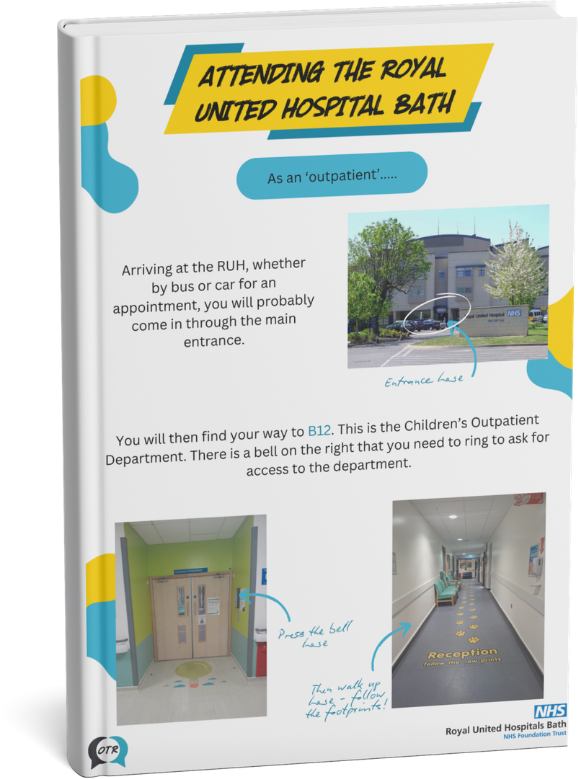
Royal United Hospital (RUH) Youth Work Project
Hospital Youth Workers offer one‑to‑one wellbeing support to help young people aged 11-25 who have accessed hospital care at the RUH, Bath for whatever reason.
What is the Hospital Youth Work Project?
OTR’s Youth Workers provide non-clinical support to young people who have had to attend the RUH – whether this is a one off or for longer term support - and are not receiving CAMHS support.
We listen to what matters to you and support you to work towards your goals.
We can help you to:
Learn ways to support your mental health and wellbeing
Explore your interests and strengths
Engage with education
Feel more in control of your health so you don’t have to be in hospital too often
Anything that you’re struggling with, we can support with or signpost
Who can access support?
Young people aged 11 to 25
Have recently attended the RUH, Bath as an inpatient or outpatient
Living, working or studying in B&NES
Not currently receiving CAMHS support
Feeling willing to engage
How does this work?
We do this by offering up to eight one-to-one sessions in a place where you feel comfortable, such as at home, in school/college/uni or even a coffee shop! Everything we do is optional and led by what you want and need.
Who can refer into this service?
You can refer yourself
Parent or carers
Professionals
Feedback from young people and professionals
“When we first met, I genuinely thought that I would always feel so bad and anxious forever, but you proved that things really can get better.”
“Youth Workers are really responsive to calls to ED [Emergency Department] to see young people. They are a wealth of knowledge that we do not have as hospital-based clinicians. Young People respond really well to a non-clinical person, but also to the service - recognising and prioritising their needs outside of physical health.”